
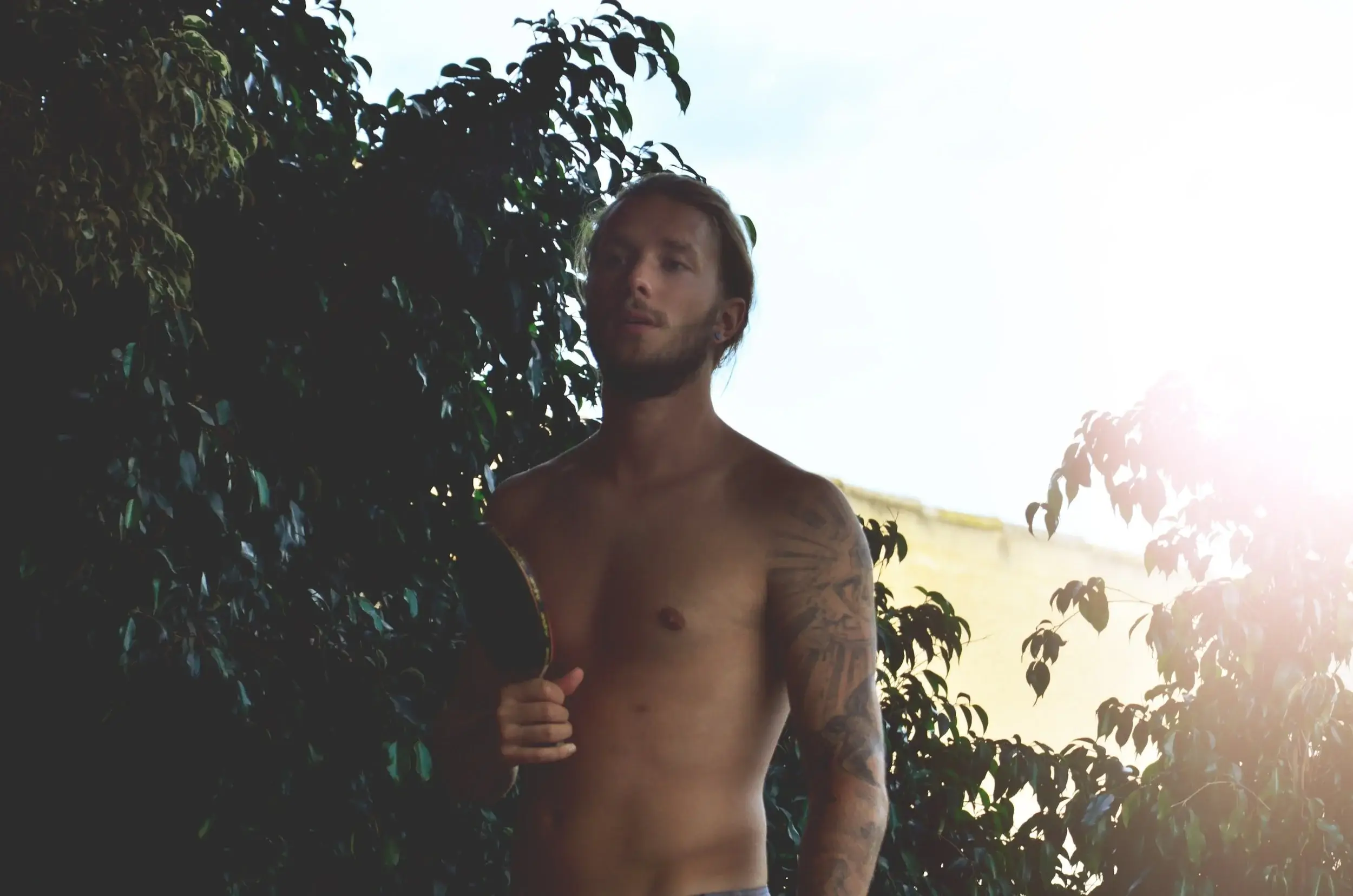
Living a Nudist Life
Many Country Network members list nudity as an interest in their profiles, so this article looks at how to embrace this lifestyle and address the benefits, misconceptions and legalities involved.
My own journey with nudity began in my early teens when I enjoyed stripping off when I was alone at home. I did not grow up in a family that practiced nudity. I occasionally experimented with a cousin who lived on a farm during family visits and we found locations on the farm where we could be naked and we could also visit remote beaches near his home. It wasn’t until my mid 20’s when I was working in northern NSW that I first visited Kings Beach, near Byron Bay. It was with a degree of nervousness and trepidation that I first visited this popular nudist beach and I was very self-conscious. What would people think and how would they react to this newcomer? The result was one of relaxed acceptance and over the next several years I visited regularly and became friendly with many of the regulars. It was funny meeting them at the shopping centre & not recognising them fully dressed!
That was 50 years ago.
Family life meant annual holidays at Nelson Bay, close to Samurai Beach, so I was able to regularly visit this legal nudist beach and it is still my favourite free beach. I became a big fan of visiting nudist beaches and now actively seek out nudist venues and accommodation wherever I travel, locally or overseas. I have been fortunate to enjoy nudist holidays in Europe and the US, as well as here in Australia. In Europe, you are spoiled for choice as nudist or clothing optional infrastructure is comprehensive in some countries.
I am now living solo and when the weather is warm, I spend most of my home time naked at home. I have been able, through planting & screening, to make my garden mostly private for outdoor naked gardening and am a member of several nudist groups.
I have found members of the nudist community, whether it be at beaches, resorts, clubs, accommodations or social groups, to be very friendly, accepting and non-judgemental and I encourage members to either practice nudity at home or seek out nudist interest groups.
Hopefully this article will answer some questions members may have about the nudist lifestyle and how to embrace it. In researching this article, I have learned a lot about how individuals and society reacts to nudity and I hope it helps you too.
Please read on
Why are people so uncertain about practicing nudism?
Nudism often feels uncomfortable at first because it goes against deeply learned social, psychological and cultural conditioning—not because nudity itself is harmful or wrong. Here are the main reasons why that initial discomfort is so common:
Social Conditioning from an Early Age
Most people grow up learning that:
- Nudity = private
- Being seen naked = shame, embarrassment or danger
- Exposed bodies must be hidden, judged or sexualized
These messages are repeated through family rules, schools, media and laws. When nudism contradicts those rules, the brain reacts with anxiety—even if nothing bad is happening.
Automatic Sexualization of the Body
In many cultures, nudity is strongly tied to sexuality.
- Advertising, movies and social media often show idealized, sexualized bodies.
- Seeing real, everyday bodies without a sexual frame can feel confusing or awkward at first.
Your mind may not yet know how to interpret non-sexual nudity, so it defaults to discomfort.
Fear of Judgment
Common internal worries include:
- “People will judge my body”
- “I don’t look good enough”
- “I’ll stand out”
Clothing usually acts as armour—it hides perceived flaws and signals identity. Removing it can feel emotionally exposing, even in respectful environments.
Loss of Social Signals
Clothing communicates:
- Status
- Personality
- Group belonging
- Mood or role
Without clothes, people may feel unsure:
- How do I present myself?
- How will others read me?
This uncertainty can trigger anxiety until new social norms are learned.
Body Image and Comparison
Because many people rarely see unfiltered bodies:
- Normal variations feel “abnormal”
- People compare themselves harshly
Ironically, spending time in nudist spaces often reduces this discomfort as diversity becomes normalized.
Fear of Doing Something “Wrong”
First-timers often worry about:
- Accidentally offending someone
- Misinterpreting boundaries
- Being misunderstood
This hyper-awareness can feel tense, even though nudist communities typically have clear rules and gentle guidance.
The Brain’s Threat Response
Novel situations trigger the amygdala (the brain’s alarm system).
- New = uncertain
- Uncertain = potential risk
Even when logically safe, your body may respond with nervousness until familiarity sets in.
What Usually Happens Over Time
For many people who choose to try nudism:
- Discomfort fades surprisingly quickly
- Nudity becomes neutral, even boring
- Confidence and relaxation increase
- Attention shifts from bodies to people, nature or activities
In summary:
Nudism feels uncomfortable at first not because it’s inherently uncomfortable but because it challenges learned beliefs about bodies, privacy and identity.
Nudist spaces are intentionally designed to help people feel safe, respected and gradually comfortable, especially beginners. That comfort doesn’t happen by accident—it’s built into how these spaces operate.
Many ask, what is the difference between nudism and naturism?
Well, they are closely related and often overlap, but they’re not exactly the same.
Here’s a summary:
Nudism
- Focus:Being naked
- Meaning:Nudism is mainly about social or recreational nudity—being nude for comfort, freedom or enjoyment.
- Emphasis:Physical comfort and body acceptance
- Context:Nude beaches, nudist resorts or private settings
- Less emphasis on:Philosophy, environment or lifestyle values
In short: nudism is about the practice of being nude.
Naturism
- Focus:A lifestyle and philosophy
- Meaning:Naturism includes social nudity plus values like respect for self, others and nature.
- Emphasis:Body positivity, environmental awareness, healthy living and non-sexual nudity
- Context:Naturist communities, camps or organizations with shared values
In short: naturism is about why and how people live nude, not just that they do.
It is important to note that both nudism and naturism are non-sexual and are about comfort and respect. How they’re practiced depends heavily on local laws, culture and setting.
What are the benefits of nudism and naturism?
Mental and Emotional Well-Being
- Body acceptance:Seeing many different body types can reduce shame and unrealistic body ideals.
- Confidence:Being comfortable in your own skin can improve self-esteem.
- Stress reduction:Some people find nudity relaxing and freeing, similar to being in nature.
Social Benefits
- Reduced objectification:In naturist spaces, nudity is normalized and not sexualized.
- Equality:Without clothing as a status symbol, people may feel more equal.
- Community and respect:Emphasis on consent, boundaries and mutual respect.
Physical Comfort and Health
- Comfort in hot weather:No tight or restrictive clothing.
- Skin health:Sunlight and air can feel beneficial (with proper sun protection).
- Body awareness:People may become more attentive to posture and health changes.
Important Considerations
- Consent is essential:Naturism only applies where everyone agrees and feels safe.
- Legal and cultural rules vary:Public nudity laws differ by country and region.
- Non-sexual by definition:Sexual behaviour is not part of naturism.
- Age-appropriate settings:Organized naturist environments have clear rules to protect minors and ensure safety.
- Naturism focuses on comfort, body acceptance and non-sexual social nudity.
- Sexual behaviour, staring, photography, or harassment are not acceptablein naturist spaces.
Understanding this mindset helps you feel more relaxed and behave appropriately.
There is no denying that we are sexual beings and sexual activity mostly involves some degree of nudity. The important point is that everything has its time and place.
It is important to distinguish between nudism, exhibitionism and sexualised nudity.
| Aspect | Nudism | Exhibitionism | Sexualized Nudity |
| Intent | Comfort, acceptance | Sexual arousal | Sexual arousal |
| Consent | Mutual and explicit | Usually none | Explicit |
| Context | Appropriate, agreed spaces | Inappropriate/public | Adult sexual spaces |
| Focus | Normalizing bodies | Being seen sexually | Sexual appeal |
| Social impact | Respectful, neutral | Disturbing or harmful | Consensual but sexual |
Why This Distinction Matters
- Legally:Nudism is lawful in specific settings; exhibitionism often isn’t.
- Ethically:Consent is the dividing line.
- Culturally:Nudism challenges the idea that nudity must equal sex.
- Practically:Nudist communities actively reject sexual behaviour to protect safety and comfort.
In summary:
Nudism is about being comfortable without clothes.
Exhibitionism is about being seen sexually.
Sexualized nudity is about arousal by design.
Popular misconceptions about nudity
Naturism (also called nudism) is often misunderstood. Here are some of the most common misconceptions—and the realities behind them:
“Naturism is sexual.”
Reality: Naturism is not about sex. It’s a non-sexual lifestyle centred on body acceptance, freedom and respect. Sexual behaviour is typically strictly prohibited at naturist beaches, resorts and clubs.
“Only certain body types are welcome.”
Reality: Naturism embraces all bodies—young, old, disabled, slim, large, scarred or otherwise. In fact, many people find naturism healing because it reduces body shame and comparison.
“Naturists are exhibitionists.”
Reality: Exhibitionism involves getting sexual pleasure from being seen. Naturists simply prefer being unclothed in appropriate social settings and generally avoid attention-seeking behaviour. “It’s unsafe or full of creeps.”
Reality: Most naturist communities have clear codes of conduct, strong social norms and active moderation. In many cases, behaviour is more respectful than in clothed spaces.
“Naturism is illegal everywhere.”
Reality: Laws vary by country and region. Many places have legal nude beaches, resorts or private lands where naturism is fully permitted.
“Children shouldn’t be around nudity.”
Reality: In naturist contexts, nudity is normalized and non-sexual. Research and testimony from naturist families suggest children raised in these environments often develop healthier body image and boundaries.
“Naturists reject clothing entirely.”
Reality: Naturists wear clothes when appropriate—weather, safety, social settings or personal comfort. The philosophy is about choice, not compulsory nudity.
“It’s a fringe or modern trend.”
Reality: Naturism has roots going back over a century, especially in Europe and is practiced worldwide across many cultures.
“Everyone is naked all the time.”
Reality: Many naturist settings are “clothing-optional” and participation varies. Comfort and consent are central principles.
“You have to be confident to try it.”
Reality: Most people start naturism without confidence—and gain it through the experience.
Nudism (or naturism) in a social context refers to the practice of being nude in shared settings where nudity is normalized and non-sexual and to the cultural, social and ethical frameworks that support it.
Here’s a clear summary of what nudism and naturism really involves:
Core idea
Nudism is based on the belief that the human body is natural and not inherently sexual. Social nudity is meant to reduce shame, promote body acceptance and encourage equality.
Typical social settings
Nudism usually occurs in designated or culturally accepted spaces, such as:
- Naturist beaches
- Nudist resorts or camps
- Private clubs or associations
- Spas or saunas (in some cultures)
- Private homes among consenting participants
These environments operate under explicit rules of respect and consent.
Social norms and etiquette
Social nudism has strong behavioural expectations:
- No sexual behaviour or staring
- Consent and respect for personal space
- Towels for hygiene when sitting
- Photography strictly regulated or banned
Violations of etiquette are typically taken very seriously.
Other Important Points
Cultural differences
Attitudes toward nudism vary widely:
- More accepted: parts of Europe (e.g., Germany, France, Scandinavia)
- More restricted: countries with conservative religious or legal frameworks
In some cultures, public nudity is viewed as normal in specific contexts (like saunas) without being labelled “nudism.”
Social and psychological aspects
Supporters often cite:
- Improved body image
- Reduced social hierarchy (clothes as status symbols are removed)
- A sense of community and openness
Critics may raise concerns about social discomfort, exclusion or cultural mismatch.
Legal and ethical context
Nudism is typically legal only in specific places. Ethical practice emphasizes:
- Informed consent
- Age-appropriate rules (often family-friendly but strictly non-sexual)
- Clear boundaries between nudism and exhibitionism
Common misconceptions
- Nudism ≠ sexuality
- Nudism ≠ lack of morality
- Nudist spaces are often more regulated than clothed ones
How to start practicing nudity?
Some good beginner options:
- At home alone or with a trusted partner
- Private backyard (if legal and not visible to others)
- Clothing-optional beaches or resorts with clear rules
- Naturist clubs or associations (often safer and well-regulated)
- Private, invitation-only gatherings
- Avoid public places where nudity isn’t permitted.
Choose safe, legal locations
- Research local laws—public nudity laws vary widely.
- Look for places clearly labelled as clothing-optionalor naturist-friendly.
- Established venues usually have rules, staff and a code of conduct.
Follow basic naturist etiquette
- Always sit on a towel (hygiene rule everywhere)
- No photos or videos unless explicitly allowed
- Respect personal space and avoid staring
- Ask before physical contact, even casual
- Nudity ≠ invitation for interaction.
- Keep physical distance unless clearly welcomed.
- Normalize Body Diversity (Including Your Own)
- Naturist spaces include all ages, body types and abilities.
- Feeling self-conscious at first is normal—it usually fades quickly.
- No one expects “perfect” bodies.
Protect your health
- Use sunscreen generously (especially areas not normally exposed)
- Wear sandals, sneakers or water shoes outdoors
- Stay hydrated
- Bring a towel, hat and cover-up if needed
Sunburn is one of the most common beginner mistakes.
Go at your own pace
- It’s okay to start partially clothed.
- You can leave at any time—there is no pressure to “commit.”
- Feeling nervous at first is completely normal.
Confidence usually comes after a short time.
Be mindful of safety and boundaries
- Trust your instincts—if a place or person feels off, leave.
- Avoid secluded or unofficial “nude spots” when starting out.
- If attending a group or resort, check reviews or official websites.
- Avoid sharing personal details too quickly.
- Be cautious with online naturist groups; stick to reputable organizations.
- If visiting alone, let someone know where you’re going.
Connect with reputable communities (optional)
Organizations often provide guidance and safe environments:
- National or regional naturist associations
- Established clubs with orientation for newcomers
These communities prioritize consent, safety and inclusivity.
Going to a nude (clothing-optional) beach or resort for the first time can feel intimidating but most people find it far more relaxed and ordinary than they expect. Here’s what you can generally expect and how to feel comfortable.
The overall vibe
- Very normal and low-key.After a few minutes, nudity stops feeling shocking. People read, swim, chat, nap or eat—just without clothes.
- Non-sexual environment.Nude beaches and resorts are about comfort, body acceptance and freedom, not sexual behaviour. Overt sexual activity is not allowed and is usually grounds for removal.
- Wide range of bodies.All ages, body types and fitness levels are represented. This often helps reduce self-consciousness.
Etiquette you should know
- No staring.Casual glances are normal; lingering looks are not.
- No photos or videos.Even selfies are often restricted. Always check posted rules.
- Ask before touching or joining.This applies to conversation, games or sitting close.
- Sit on a towel.Always use your own towel when sitting on shared surfaces.
- Follow local rules.Some beaches are fully nude; others are clothing optional.
What to bring
- Towel (or two).
- Sunscreen (extra important).
- Flip-flops, thongs, beach shoes or sandals.
- Water and snacks.
- Hat and sunglasses.
- A cover-up (sarong, robe or shorts) if you want an easy on/off option.
Social expectations
- You don’t have to undress immediately.Many people take their time.
- Conversation is normal.Small talk is common but no one expects you to socialize if you’d rather relax.
- Consent is key.Nude does not mean open or available.
Common first-timer worries (and realities)
- “Everyone will stare.”→ They won’t. Most people are focused on themselves.
- “I’ll feel exposed.”→ That feeling usually fades quickly.
- “I have to be nude.”→ Clothing-optional means optional unless clearly stated otherwise.
- “I may get an erection”→ If you become erect, just lie face down on your towel or cover yourself until things subside. You will find that seeing other naked people behaving normally around you soon becomes routine and not a trigger for arousal.
Tips for your first visit
- Choose a well-known, established locationfor your first time.
- Go earlier in the daywhen it’s quieter.
- Bring a friend or partnerif that feels safer.
- Give yourself permission to leave anytime—even after 10 minutes.
Many first-timers leave surprised by how peaceful and confidence-boosting the experience is.
Clear Rules Set Expectations
Nudist spaces are intentionally designed to help people feel safe, respected, and gradually comfortable, especially beginners. That comfort doesn’t happen by accident—it’s built into how these spaces operate.
Most nudist beaches, resorts, and clubs have explicit guidelines, such as:
- No sexual behaviour
- No staring, comments or photography
- Respect personal space and boundaries
- Nudity is optional in some areas
Knowing the rules reduces anxiety because people understand what’s expected and what’s not allowed.
Consent Is Built into the Environment
Everyone present has chosen to be there.
- No one is being surprised or exposed unwillingly
- This shared agreement removes fear of judgment or shock
- It clearly separates nudism from public exposure
Consent creates psychological safety, which is key to relaxation.
Gradual Participation Is Normalized
Nudist spaces usually allow people to:
- Keep clothes on at first
- Remove clothing at their own pace
- Stay partially clothed if they prefer
There’s no pressure to “perform” nudity. Comfort grows naturally.
Normalization Through Diversity
Seeing a wide range of real bodies—different:
- Ages
- Sizes
- Abilities
- Genders
—quickly challenges the idea that bodies must look a certain way. This exposure often reduces self-consciousness faster than reassurance ever could.
Behaviour Is Intentionally Non-Sexual
People are usually:
- Reading
- Swimming
- Talking
- Gardening
- Playing games
When nudity is paired with ordinary activities, the brain reclassifies it as neutral, not charged or threatening.
Community Modelling
Experienced nudists tend to:
- Act relaxed and casual
- Avoid body-focused conversation
- Treat nudity as unremarkable
This modelling subconsciously signals, “You’re safe here; nothing unusual is happening.”
Reduced Social Comparison
Without clothing:
- Status symbols disappear
- Fashion competition vanishes
- People interact more directly and honestly
This often leads to a sense of equality and emotional ease.
Strong Boundary Enforcement
If someone behaves inappropriately:
- Staff or community members intervene
- Clear consequences exist
Knowing that boundaries are actively protected helps newcomers relax instead of staying hyper-vigilant.
Nature and Environment Play a Role
Many nudist spaces are outdoors:
- Beaches
- Forests
- Hot springs
Natural settings lower stress levels and shift focus away from appearance and toward sensory experience.
What Newcomers Often Notice
After some time, many people report:
- Forgetting they’re nude
- Feeling calmer than expected
- Realizing others aren’t paying attention to their bodies
- A sense of relief rather than exposure
In summary:
Nudist spaces ease comfort by combining consent, structure, normalization and respect, allowing the brain to relax and reframe nudity as ordinary.
Here’s a clear breakdown:
Core idea
Nudism is based on the belief that the human body is natural and not inherently sexual. Social nudity is meant to reduce shame, promote body acceptance, and encourage equality.
Typical social settings
Nudism usually occurs in designated or culturally accepted spaces, such as:
- Naturist beaches
- Nudist resorts or camps
- Private clubs or associations
- Spas or saunas (in some cultures)
- Private homes among consenting participants
These environments operate under explicit rules of respect and consent.
Social norms and etiquette
Social nudism has strong behavioural expectations:
- No sexual behaviour or staring
- Consent and respect for personal space
- Towels for hygiene when sitting
- Photography strictly regulated or banned
Violations of etiquette are typically taken very seriously.
Cultural differences
Attitudes toward nudism vary widely:
- More accepted: parts of Europe (e.g., Germany, France, Scandinavia)
- More restricted: countries with conservative religious or legal frameworks
In some cultures, public nudity is viewed as normal in specific contexts (like saunas) without being labelled “nudism.”
Social and psychological aspects
Supporters often cite:
- Improved body image
- Reduced social hierarchy (clothes as status symbols are removed)
- A sense of community and openness
Critics may raise concerns about social discomfort, exclusion, or cultural mismatch.
Legal and ethical context
Nudism is typically legal only in specific places. Ethical practice emphasizes:
- Informed consent
- Age-appropriate rules (often family-friendly but strictly non-sexual)
- Clear boundaries between nudism and exhibitionism
Common misconceptions
- Nudism ≠ sexuality
- Nudism ≠ lack of morality
Nudist spaces are often more regulated than clothed ones
Factors Influencing the acceptance of nudity
Around the world, including here in Australia, nudity is treated or accepted in many ways. Societies sexualize nudity to different degrees because nudity isn’t inherently sexual—its meaning is shaped by culture, history, religion, economics and power. A few key factors explain the variation:
Cultural norms and social learning
People learn from childhood what bodies “mean.”
- In cultures where nudity is common (e.g., communal bathing, breastfeeding in public), bodies are normalized and less eroticized.
- Where nudity is rare or restricted, it becomes novel and charged, which often increases sexualization.
Scarcity creates intensity.
Religion and moral frameworks
Religious traditions strongly influence attitudes toward the body:
- Religions emphasizing modesty, sin or bodily control often link nudity to shame or temptation.
- Cultures with less moral emphasis on sexual restraint tend to separate nudity from sex more easily.
This doesn’t mean “religious = repressed” but moral narratives shape how bodies are interpreted.
Historical power and social control
Sexualizing nudity can be a tool of control, especially over women:
- Regulating clothing, exposure and “decency” reinforces social hierarchies.
- Colonial and Victorian-era values exported strict norms to many regions, even where nudity had previously been normal.
Sexualization often increases where bodies are politicized.
Media, capitalism and commodification
Modern media amplifies sexualization:
- Advertising, film and social media frequently link nudity to desire, status and consumption.
- When bodies are used to sell products, nudity becomes instrumentalizedas sexual.
Some societies resist this commodification more than others.
Gender norms and inequality
Where gender inequality is higher:
- Nudity is more likely to be sexualized, policed or punished.
- Men’s and women’s bodies are treated differently, with women’s nudity often seen as inherently sexual.
In more egalitarian societies, nudity tends to be contextual rather than moralized.
Psychological familiarity
There’s a cognitive effect at play:
- Frequent exposure → desensitization → neutral perception
- Rare exposure → heightened attention → sexual interpretation
This is why naturist cultures report lower rates of body shame and objectification.
Separation (or lack of) between nudity and sexuality
Some cultures clearly distinguish:
- Nudity = the body
- Sexuality = behaviour, intent, context
Others collapse the two, making any exposed body automatically sexual.
In short
Societies that sexualize nudity more tend to:
- Restrict bodies
- Moralize exposure
- Commodify sexuality
- Maintain rigid gender roles
Societies that sexualize it less tend to:
- Normalize bodies
- Emphasize context over exposure
Separate physical form from sexual intent
Nudity in Australia
Australia’s approach to nudity is often described as pragmatic, contextual and relatively relaxed, though it still has clear boundaries. It sits somewhere between Northern European normalization and Anglo-American prudishness. However, I would venture to suggest that given the impact of social media, Australia’s acceptance of nudity has been trending more towards prudish and restrictive in recent times.
Here’s how it breaks down:
Context matters more than nudity itself
In Australia, nudity is generally judged by where and why, not by the mere fact of being naked.
- Accepted contexts:beaches, surf culture, changing rooms, saunas, art, performance, medical settings
- Less accepted:urban public spaces where nudity is unexpected or disruptive
This reflects a broader cultural value: don’t make a fuss, don’t impose on others.
Strong beach and outdoor culture
Australia’s climate and geography shape attitudes:
- Beachgoing is central to national identity
- Topless sunbathing and changing openly at beaches are widely tolerated
- Nude beaches are legal and socially accepted in many areas
Because bodies are routinely seen in minimal clothing, partial nudity isn’t heavily sexualized.
Legal framework: permissive but vague
Australian nudity laws are:
- State-based, not national
- Often rely on concepts like “offensive,” “indecent” or “reasonable person”
This gives police discretion but also means:
- Non-sexual nudity is rarely prosecuted
- Sexual intent, harassment or disturbance is the key legal trigger
In practice, casual nudity without sexual behaviour is usually ignored.
Anglo roots + larrikin culture
Australia inherited British modesty norms but they’ve been softened by:
- Anti-authoritarian attitudes (“no wowserism”)
- A larrikin ethos that mocks moral panic
- Cultural suspicion of prudishness and over-policing
This produces tolerance without ideological commitment to nudism.
Media and sexuality: blunt but not puritan
Australian media tends to be:
- Direct and unembarrassed about sex
- Less moralizing than US media
- More willing to show nudity without heavy erotic framing
Sexual humour is common, but bodies aren’t automatically scandalized.
Gender dynamics
Compared to many countries:
- Toplessness for women is more socially tolerated (especially at beaches)
- There’s still gendered scrutiny but less moral panic than in more conservative cultures
- Public breastfeeding is broadly normalized
That said, double standards haven’t disappeared.
Indigenous perspectives (often overlooked)
Before colonization, many Indigenous Australian cultures:
- Had different norms around dress and nudity
- Did not automatically sexualize the unclothed body
Colonial laws imposed European ideas of “decency,” which still shape legal systems today.
In summary
Australia tends to treat nudity as:
- Normal but situational
- Not inherently sexual
- Acceptable if non-disruptive and non-sexual
It’s not a nudist culture—but it’s far less anxious about bodies than many English-speaking societies.
Australian Laws relating to nudity
When it comes to the legality of nudism in AustraliaWhen it comes to the legality of public nudism in Australia, the law is generally restrictive outside designated areas. Our laws are more restrictive than in some countries, for example, Europe and Scandinavia, where laws focus on intent and behaviour, rather than regarding nudity as being obscene. Our laws are also more restrictive than in the UK and New Zealand. However, all countries prosecute wilful and sexualised displays of nudity.
Public nudity is generally prohibited in Australia under state and territory laws dealing with public decency, offensive behaviour or indecent exposure. That means being naked in a normal public place (street, park, non-designated beach) can lead to charges if someone complains or if police decide the exposure is “obscene” or offensive.
There are no federal laws expressly legalising public nudity — it’s entirely decided by state/territory legislation and in many cases, local council bylaws.
Legal framework
- There is no uniform federal lawabout public nudity — it’s regulated by state/territory laws. org
- Most states make it an offence to wilfully and obscenelyexpose oneself in public — even if there’s no sexual act. org+1
Typical approach
- Public nudity is illegalin most places unless it’s at a designated “clothing-optional” beach or area. Armstrong Legal
- g., in NSW, Wilful and obscene exposure is an offence; however nudity is allowed on specific nude beaches. Armstrong Legal
- Penalties for obscene exposure vary:
- NSW: up to ~6 months’ jail or fine. Armstrong Legal
- Victoria and WA: up to 2 years’ imprisonment (though prosecutions are rare). org
- Other states/territories have similar offences with fines/short sentences. org
Practical effect
- You can legally be nude at official naturist beachesand some designated places. Public nudity elsewhere can lead to arrest or charges, unless police decide your conduct was not offensive.
By comparison, in New Zealand there is no statute that outright bans simple public nudity. Being naked in public by itself isn’t an offence. haurakinaturally+1
When could it be unlawful
- If nudity is combined with:
- Obscene exposure(intentional and obscene exposure of genitals). haurakinaturally
- Offensive or disorderly behaviourlikely to alarm, insult, or provoke a reaction. Critic
In the United Kingdom, simple non-sexual public nudity is usually lawful unless it is intended to offend or actually causes distress. JustAnswer
So, in Australia, stay within designated nude/beach zones or you risk charges under summary offences. Armstrong LegalTop of Form
Bottom of Form
How the Law Is Applied in Practice
- Police discretion matters:Officers may decide not to act if nudity is harmless and not bothering anyone — especially in remote areas — but they can enforce laws on “indecent exposure” when complaints occur.
- Complaints drive enforcement:Simply being nude may not automatically lead to charges unless someone complains it’s offensive.
Private Property
- Nudity on private propertyis generally legal — as long as it’s not visible to the public.
- If visible from a public place, it could be treated the same way as public nudity under local laws.
The remainder of this article supplies information on Australian nudist beaches and hiking.
Here’s how nudity laws in Australia apply to naked hiking — which is very different from being nude on a designated beach or private land.
- General Legal Principle in Australia
- In most parts of Australia, being nude in a public place outside specifically designated clothing-optional areas is an offenceunder state/territory “obscene exposure” or “offensive behaviour” laws. There is no nationwide law legalising naked hiking — and nudity itself can be prosecuted if it’s in view of the public or likely to cause offence. org+1
Naked Hiking Specifically
No Legal Right to Hike Nude
- Most hiking trails are public places(state forests, national parks, fire trails, etc.) and are not designated as clothing-optional areas. Being fully nude while hiking would likely be seen as public nudity in view of others and could be charged as obscene/indecent exposure. org
Context Matters (Enforcement Is Discretionary)
- While the strict wording of the laws could criminalise simple nudityeven in a remote bush trail, police enforcement varies:
- In very remote areas with no foreseeable contact with others, some naturists report being left alone — but this is not a legal guarantee. Squarespace
- If another person (especially a child or someone who finds it offensive) witnesses the nudity and complains, police could decide to enforce the law. org
Offence Threshold
In many states, offences don’t require a sexual act — being naked alone can be enough if the exposure is “wilful and obscene.” Armstrong Legal
Factors police/courts might consider:
- Was anyone else present or likely to see you?
- Could the nudity reasonably be expected to cause offense or alarm?
- Was the place signposted or known as a naturist area?
Practical Reality
- Designated nude beaches exist(e.g., Lady Bay, Cobblers Beach in NSW; Sunnyside North and Point Impossible in Victoria), but there are no official nude hiking trails. Armstrong Legal+1
- A few informal groups organise “nude walks” in rural areas where participants plan ahead, choose secluded routes, and ensure no unintended public contact — but these operate in legal grey zones and carry risk. com.au
What Could Happen if You Hike Naked
If police encounter you hiking nude in a non-designated area, possible outcomes include:
- Verbal warning
- Citation/finefor obscene exposure
- Arrest and formal charges
- Court appearanceand potential fines/jail (penalties vary by jurisdiction) org
Even if you believe you are in a remote location, the law hinges on whether your nudity is visible from a public place, not just where you intend to be alone. acfl.com.au
Summary
| Situation | Legal Position | Notes |
| Hiking nude on most public trails | ❌ Illegal | Could be charged as obscene/indecent exposure. Change.org |
| Hiking fully clothed or partially clothed | ✅ Legal | Normal outdoor activity. |
| Organized “nude walk” groups in remote/secluded areas | ⚠️ Risky/grey | Sometimes tolerated — not legally protected. nudewalksvic.com.au |
| Designated nude beaches | ✅ Legal (beach only) | No equivalent for hiking trails. Armstrong Legal |
Tips If Considering It
- Know local lawsin the state/territory you’ll hike.
- Avoid public trailswhere other hikers or families are likely.
- Consider private land with permissionfor nude hiking to avoid public exposure laws.
- Be prepared for police discretion— just because the place is remote doesn’t mean it’s legal.
Designated Legal Nude Beaches & Areas
Some parts of Australia do have officially recognised clothing-optional beaches where social nudity is legal and accepted:
New South Wales (NSW)
- Several officially designated nude beaches, including:
- Lady Bay (Lady Jane) Beach
- Cobblers Beach
- Obelisk Beach
- Samurai Beach
- Armands Beach
- At these beaches, nudity is permitted by public notice and local authority designation.
Victoria
Victoria has a few designated legal nude beaches under specific legislation (the Nudity (Prescribed Areas) Act), including:
- Sunnyside North Beach
- Point Impossible Beach
- Southside Beach
These beaches have clear signage showing where clothing-optional use is legal.
South Australia
- Maslin Beach— Australia’s first legal nude beach (declared in 1975) — is a long-established, legally recognised clothing-optional area.
Western Australia
- North Swanbourne Beach (near Perth)– Well-known clothing-optional spot.
Northern Territory
- Casuarina Beach (Darwin)– Recognised clothing-optional area.
Queensland and Tasmania – There are no officially designated nudist beaches
New South Wales (NSW) – Popular Unofficial Spots
(Note: Some of these are known for naturist use despite not being officially designated now.)
- Little Congwong Beach (La Perouse, Sydney)– Small sheltered cove popular with naturists.
- Shelly Beach (Forster area)– Used by some naturists.
- Myrtle Beach (NSW Central Coast)– Informal naturist use reported.
- Little Diggers Beach (Coffs Harbour area)– Clothing-optional by tradition.
- Jibbon Beach & Little Jibbon Beach (Royal National Park)– Quiet beaches where some naturists go.
- Ocean Beach & Kings Beach (NSW north coast)– Known locally for naturist use.
- Little Pebble Beach (Halliday’s Point)– Remote beach with naturist visitors.
Historical/closed but culturally noted:
- Tyagarah Beach near Byron Baywas once a beloved clothing-optional beach, but its legal status was removed in 2024 — some naturists still recall it as a nudist spot; current nudity there may attract enforcement.
Queensland (QLD) – Unofficial Beaches
Queensland currently has no legally designated nude beaches, but naturists still use a few secluded spots (with increasing police attention in places like Noosa):
- Alexandria Bay (Noosa National Park)– Historically the most famous unofficial nudist beach in QLD, though recent police crackdowns mean nudity can lead to fines.
- Balding Bay (Magnetic Island)– Secluded, unofficial clothing-optional beach only reachable by hike or boat.
- Buchans Point (near Ellis Beach north of Cairns)– Known locally as an unofficial naturist end of the beach.
- Bowen Beach area (Horseshoe Bay region)– Reported as an unofficial naturist spot by local guides.
Note: These Queensland beaches are unofficial — nudity can be legally risky, and enforcement varies with complaints.
Other Regions and Notes
- Western Australia (WA)and Tasmania have some remote or seldom-used unofficial spots reported among locals, but specifics are less documented online — often simply quieter stretches of beach where naturist use occurs with low visibility.
- Inland or river spots (e.g., swimming holes or secluded riverbanks) are sometimes used by naturists but can be subject to local public decency laws — always check local signage and rules.
Important Legal & Safety Tips
- Unofficial = not legally protected:Being nude on an unofficial beach can still be an offence under state public decency or “wilful exposure” laws. Enforcement often depends on complaints.
- Respect local sensitivities:Areas near paths, car parks or family beaches can attract complaints even if naturists have used them for years.
- Do your research:Local council regulations, signage and police attitudes can change — it’s wise to check recent information before visiting.
- Etiquette matters:Even unofficial naturist areas emphasize respect, consent and non-sexual behaviour.
Northern Territory
- There has beenprovision for designated public nudity areas under the Nudity Act, though options remain limited.
In most other public places, simply being naked can still be an offence:
Queensland
- Public nudity is broadly treated as “wilful exposure” and is illegal where it’s visible to others.
- Queensland does not have officially designated nude beaches, so naturists must be careful — fines can apply if police interpret the act as exposure.
Western Australia, Tasmania & ACT
- Public indecent exposure laws apply based on general state/territory summary offences or criminal codes.
- Some have legislative powersto authorise clothing-optional areas but few formal ones exist.
Elsewhere
- Outside officially designated areas — such as parks, streets, or general beaches— nudity can be treated as innocent but may still result in police warnings, fines or charges if it’s considered offensive or indecent.
Penalties
Penalties for public indecent exposure vary by jurisdiction — from fines to possible jail terms in some states, although in practice serious sentences are rare unless there’s intent to sexually arouse or offend others.
📌 Quick Takeaways
- ✅Public nudity is legal at recognised clothing-optional beaches or areas officially designated by authorities.
- ⚠️Public nudity is otherwise usually an offence under state/territory decency laws and can lead to fines or other penalties.
- 🏖️Practice tolerance varies by location and enforcement is often complaint-driven.
- 🧍♂️Private property nudity is allowed, unless visible to unwilling members of the public.
This article has been designed as a basic guide to living and enjoying a life of social nudity. Information has been sourced from a mix of personal experiences and freely available content from the public domain. It is comprehensive but does not claim to be a definitive guide and the author would be interested to receive feedback from members about their nudist lifestyle experiences. Updates on the information provided will be appreciated.
Peter Agar
Author